Music, Memories, and Emotions

Publications

Overview

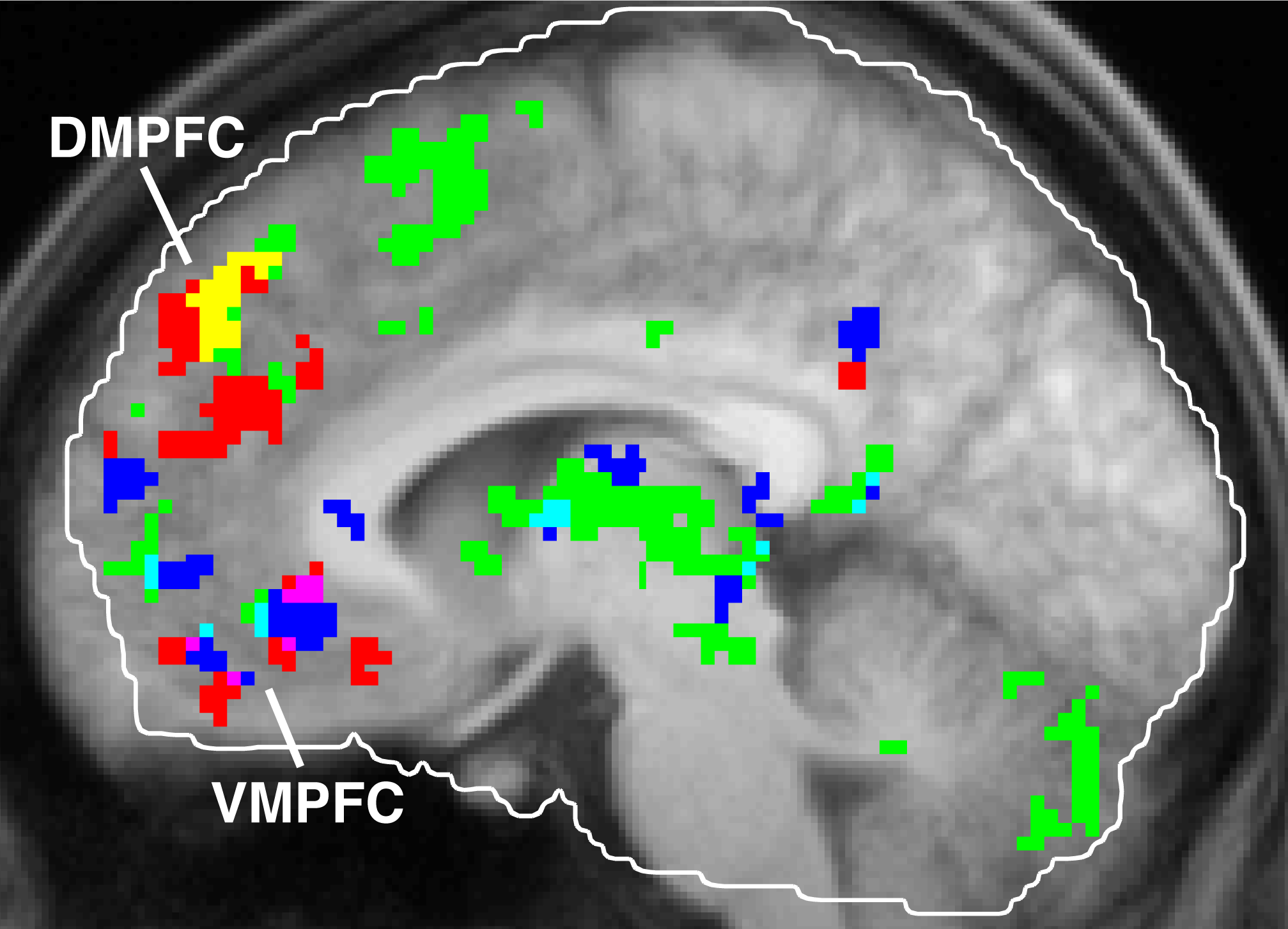
In this project we are studying how music and autobiographical memories interact. We have approached the problem by first characterizing the content of music-evoked autobiographical memories in college students, and then performing a functional magnetic resonance imaging (fMRI) study with some of these subjects. The image to the right shows results from this study and indicates that the medial prefrontal cortex (MPFC) associates music and memories.

This project is motivated by a pair of observations about Alzheimer's disease patients. One is that the MPFC is relatively spared as the disease progresses, and lots of anecdotal evidence indicates that individuals with Alzheimer's disease remain very responsive to music from their past. It seems to give them great pleasure. We would like to develop a neuroscientific rationale for simple cost-effective quality-of-life improvement strategies for these individuals. Please click here if you are interested in supporting this effort.

Brain regions in green responded more strongly to familiar versus unfamiliar songs. Regions in red responded most strongly to strongly memory-evoking songs. Areas in blue responded more when a song was experienced as pleasing. The dorsomedial prefrontal cortex (DMPFC) shows combined effects of familiarity and autobiographical salience (shown in yellow).

We have also recently completed a behavioral characterization of music-evoked nostalgia. Our next step is to study the interaction of music, memories, and emotions in older adults so that we can move closer to our goal described above.

From Musical Space to Brain Space

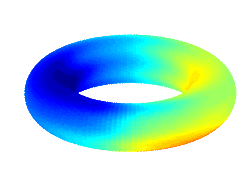
See how some of the musical excerpts we used in these studies move around in tonal space.

In the news...

  • Click here to read the UC Davis press release. February 24, 2009.
  • Live Science
  • All other media reports were derived, with varying degrees of accuracy, from the UCD press release or from the derivatives themselves. Nowhere have I ever claimed, nor do I at the present time believe, that listening to music is a cure for Alzheimer's disease.

Here are other in-depth stories:

bottom corner